
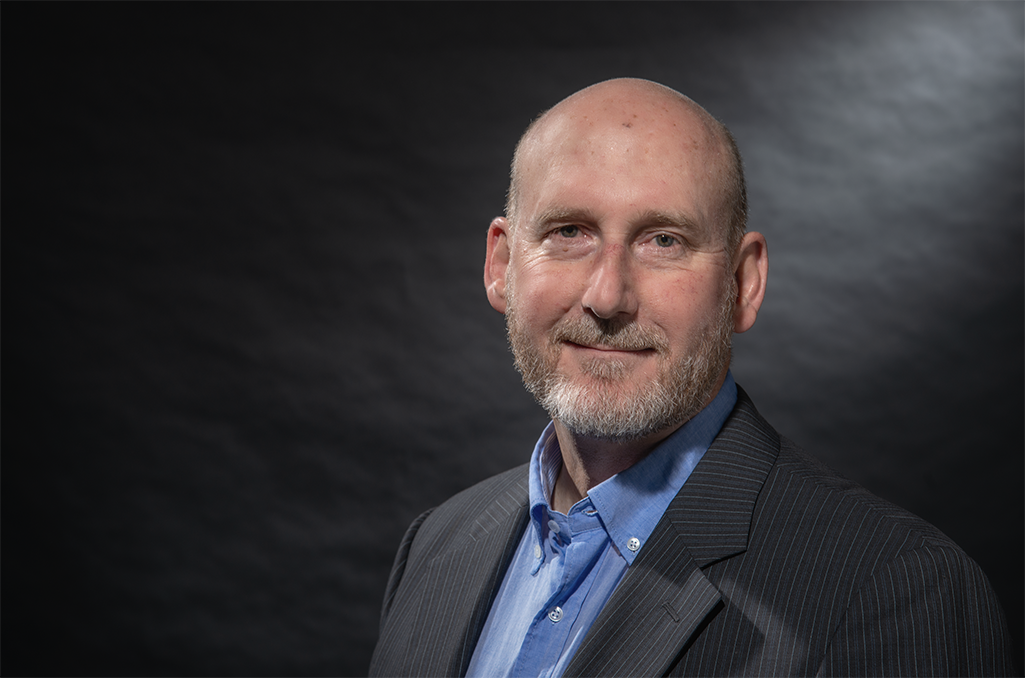
Esarey is an internationally renowned expert in the theory of intense laser interactions with beams and plasmas, advanced particle accelerators, and novel radiation sources. He received his BS in Nuclear Engineering from the University of Michigan in 1981 and his PhD in Plasma Physics from MIT in 1986, where he studied magnetic confinement fusion. He was at the Naval Research Laboratory from 1986 to 1998, where he worked on the theory of free-electron lasers and plasma-based accelerators.
Esarey joined Berkeley Lab in 1998 and was among the founders of the BELLA Center. After serving as BELLA deputy director for several years, he served as its director from 2019 to 2025.
“It has been my pleasure to be part of the BELLA Center these past many years,” says Esarey. “Much of our success is owing to the BELLA Center’s outstanding leadership team — Carl Schroeder, Jeroen van Tilborg, Anthony Gonzales, and Kei Nakamura — all of whom I’ve known and had the pleasure of working with since they were graduate students. Likewise, we owe a big thanks to our ATAP Division Director, Cameron Geddes, whom I’ve also known and had the pleasure of working with since he was a graduate student, as well as its present Director, Jens Osterhoff, who is taking the Center forward in exciting directions. I would also like to acknowledge the many excellent scientists, researchers, engineers, technicians, postdocs, and students who have been part of the BELLA Center. We would not have achieved our high level of success without the contributions and hard work of all of these individuals.”
Some of BELLA’s recent outstanding accomplishments include the construction and commissioning of the BELLA PetaWatt laser second beam line, which enables two synchronized, independently controlled laser pulses on target; the acceleration of electrons to 10 GeV using the BELLA PW laser in a 20 cm laser-generated plasma channel; the stable operation of a free-electron laser driven by a laser-plasma accelerator; advances in coherent combination of fiber lasers to achieve high-average-power trains of short laser pulses at kHz repetition rates; laser acceleration of energetic ions for studies in FLASH radiotherapy and biology; and theoretical studies of future high-energy colliders at the 10 TeV level based on laser-plasma accelerators.
Esarey has published more than 275 refereed journal articles, which have received more than 27,500 citations and have a Web of Science h-index of 76. This includes a comprehensive article in Reviews of Modern Physics that many consider the definitive review of plasma-based accelerators. He was elected a Fellow of the American Physical Society in 1996. Esarey has won several awards, including the 2010 John Dawson Award for Excellence in Plasma Physics Research from the American Physical Society; the 2018 Advanced Accelerator Concepts Prize; two LBNL Director’s Awards for Exceptional Scientific Achievement (one in 2019 for his own achievements and another in 2025 as a member of the 10-GeV Core Team); the 2023 Merit Award as a distinguished alumnus of the University of Michigan Engineering; the 2025 US Particle Accelerator School Prize for Achievement in Accelerator Physics and Technology; and the 2025 University of Michigan Prize for Excellence in Plasma Science and Engineering.
Moving forward, Esarey will remain involved in BELLA’s activities as an affiliate. “I am very excited to be able to spend time on my original passion—theoretical studies of ultrahigh-intensity laser interactions with beams and plasmas—and to be involved with the ongoing research programs within BELLA.” One of the high-profile projects this coming year will be the experimental demonstration of the high-efficiency staging of two laser-plasma accelerator modules to generate multi-GeV electron beams. By staging more and more LPA modules together, higher energies are achieved, enabling a wide range of studies and applications.
We thank Eric for his long and distinguished service to ATAP and wish him the best in retirement.
For more information on ATAP News articles, contact caw@lbl.gov.
