
Building on team-science traditions that go back to the deepest roots of the Laboratory, we strive to be a partner of choice in applying accelerator technologies to the most challenging problems at scales ranging from the laboratory bench to major and often multi-institutional projects.
High-Luminosity Large Hadron Collider Accelerator Upgrade Project (HL-LHC-AUP)

Leveraging expertise in state-of-the-art superconducting magnets as part of a multi-laboratory project to enhance the productivity of the Large Hadron Collider for discovery science in high-energy physics.
Taking Linac Coherent Light Source II (LCLS-II) to Higher Energies

Reprising our role in the Linac Coherent Light Source II project (an X-ray free-electron laser facility at SLAC) by designing soft-X-ray undulators and low-level RF control systems for its high-energy upgrade.
Upgrading the Advanced Light Source

Working with the Laboratory’s Advanced Light Source Upgrade Project to design, build, and commission a state-of-the-art re-envisioning of its accelerator complex that will power discovery science for decades.
LaserNetUS
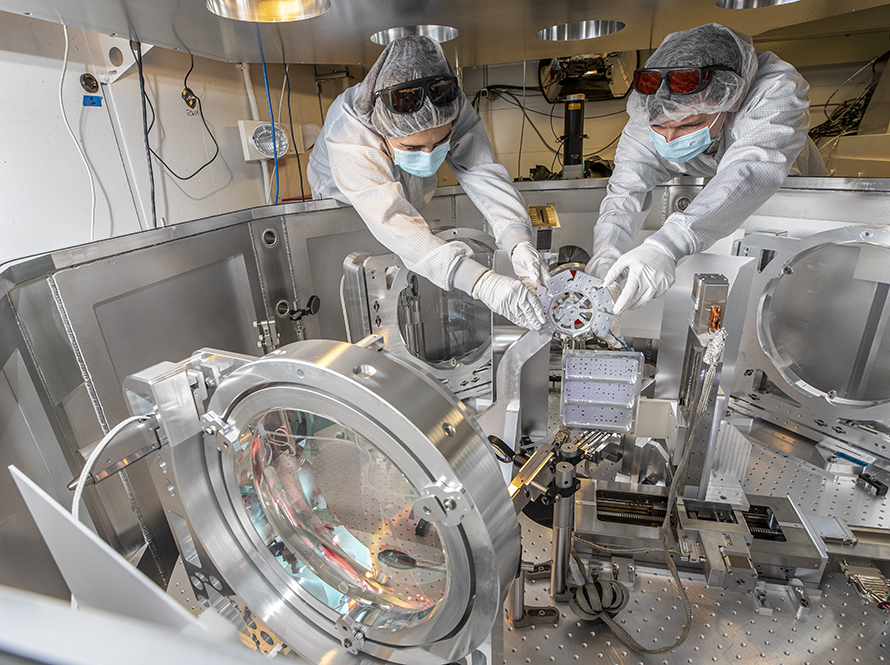
Making BELLA Center’s high-power lasers, including the BELLA Petawatt and Hundred-Terawatt Thomson beamlines, accessible to a broad community of researchers through an Office of Fusion Energy Sciences-supported program.
BeamNetUS
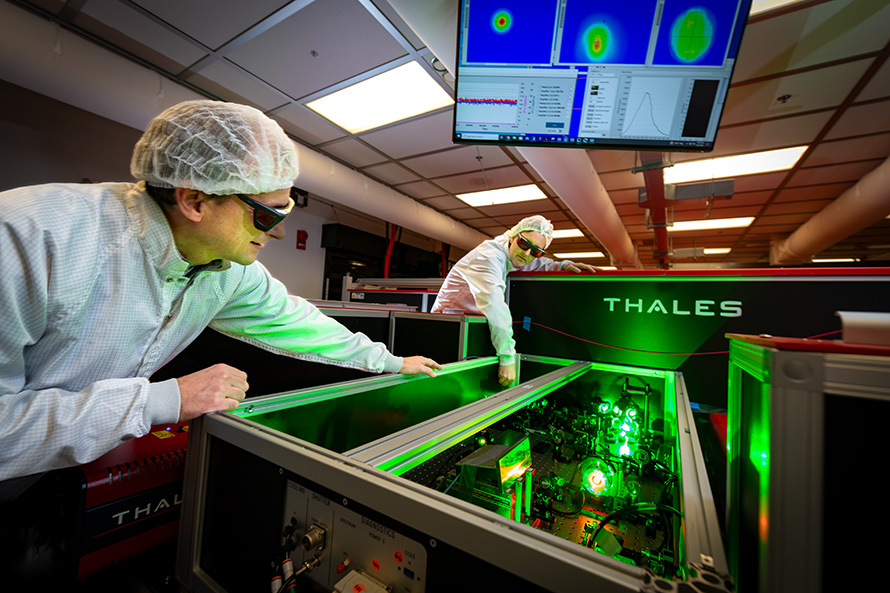
BeamNetUS is a network of facilities that advance particle accelerator research and technology by offering beam and equipment access across the DOE national laboratory complex.
Modeling in the Exascale Era
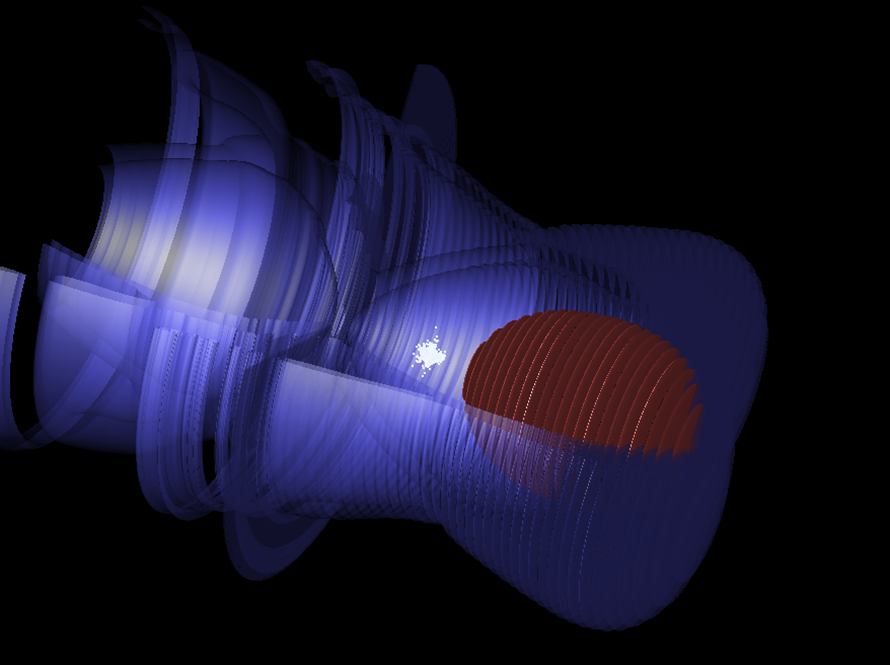
Developing simulation codes that take advantage of exascale computing—capable of a billion-billion (1018) mathematical operations per second—for improved modeling of particle accelerators and fusion plasma devices.
Fiber Lasers: Toward kBELLA
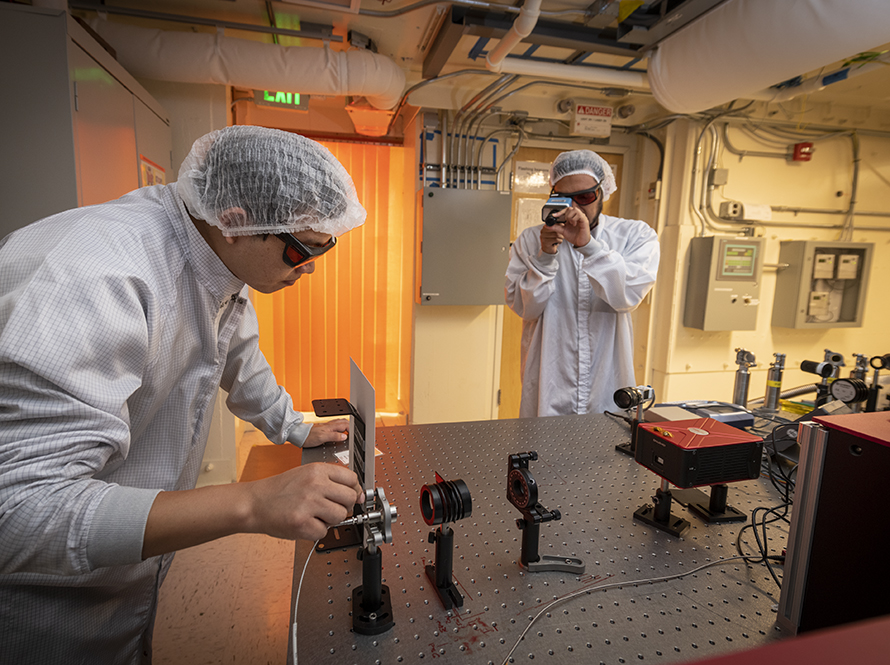
To enhance applications of LPAs, we are developing novel fiber laser technologies capable of delivering intense laser pulses at high (kHz) repetition rates. Fiber lasers can provide highly efficient, compact, robust monolithic laser architectures. We can produce high-energy laser pulses by combining many fiber pulses in space and time. Our future kBELLA facility will be driven by fiber lasers at high average power (kW), enabling LPA applications in discovery science, medicine, and industry.
Leading SciDAC Projects

Leading two multi-laboratory Scientific Discovery through Advanced Computing (SciDAC) projects: the Collaboration for Advanced Modeling of Particle Accelerators (CAMPA) for high-energy physics and the Kinetic IFE Simulations at Multiscale with Exascale Technologies collaboration (KISMET) for fusion energy sciences.