
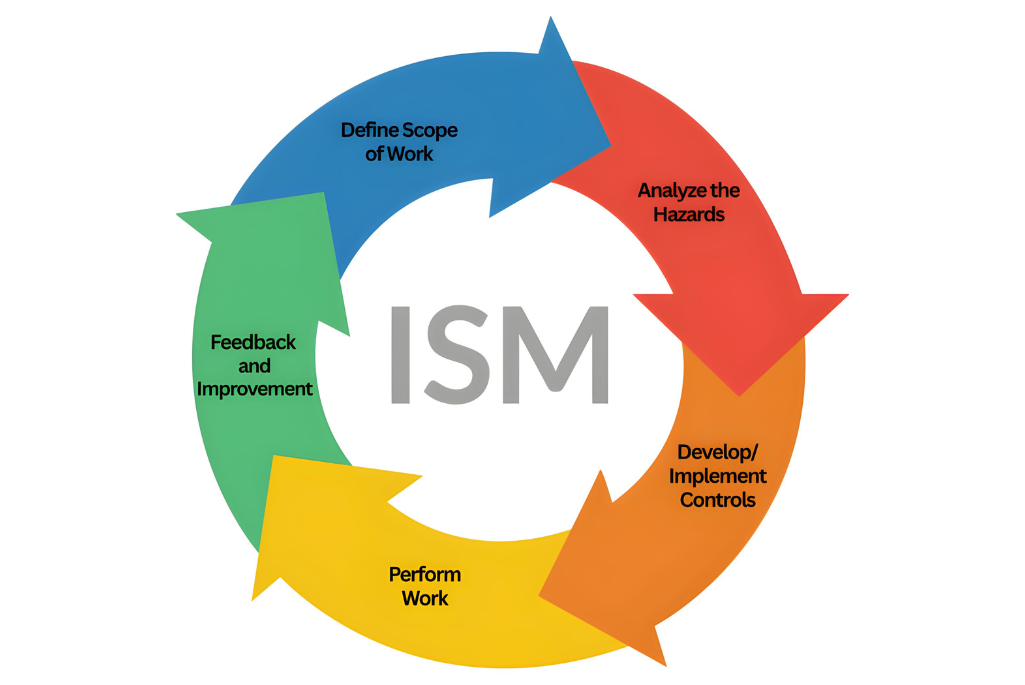
Our Integrated Safety Management (ISM) process promotes proactive thinking, open discussions about concerns and solutions, and plan adjustments as work evolves. The aim is to work safely while conducting science aligned with our mission.
ISM covers various aspects, from planning through to completion. It includes five interconnected processes that work best when integrated.
- Identify the scope of work
- Analyze the hazards–look for things that could cause harm
- Control the hazards
- Perform work within the controls
- Feedback and improvement
Experimental planning is most successful when the researchers are involved from the start.
Some key tips to consider while engaging the ISM process:
- Identify the scope of work
- Engaging the researchers early helps us create safety documents (e.g., Work Planning and Control documents, Procedures, Checklists) that accurately reflect the actual work conditions and requirements.
- Sharing the experimental goals with the team members helps ensure alignment and buy-in across all levels of the project.
- Planning for the unforeseen – When defining the scope of work, consider potential unexpected issues that might arise.
- Discussing regulatory requirements that must be met is crucial. Being upfront with your team about these often non-negotiable requirements will ensure they are fulfilled.
Analyze the Hazards
- When discussing hazards, it is important to understand the possible outcomes if a mistake occurs during an experiment.
- Consider potential scenarios where hazards might increase due to process changes introducing new hazards.
- Experiments and the environment (such as new people, equipment, or processes) change during many experiments, so identifying hazards is an ongoing process.
- Teams can help identify potential hazards or areas where new hazards might develop.
Develop Effective Controls
- Getting feedback on hazard controls is an ongoing process. As work or experiments progress, expect conditions to vary. Controls that once seemed effective may no longer be practical.
- Engaging work teams to help identify potential consequences if a hazard control isn’t properly implemented, and where a control may be difficult to put in place. This can make the hazard control more practical.
- Realizing that if a hazard control obstructs the experiment, it might be bypassed.
Consideration When Performing Work
- A key part of the work plan is to monitor it during the experiment to detect any changes in conditions.
- Ensuring that the steps of the work plan run smoothly and effectively.
- Recognizing the challenges in the experiment and taking the time to revise the work plan.
Feedback and Improvement
- In the spirit of continuous improvement, collecting feedback throughout the work cycle is a crucial part of ISM. Being proactive about feedback and improvement is essential, and it is not just a one-time step.
Stop Work
Sometimes, improvement involves making small changes. Other times, it means stopping work to review and discuss the plans. An essential part of the work plan is also the ability to pause work when safety concerns arise. If something doesn’t feel safe or if you’re unsure, we encourage people to speak up. Everyone is empowered, expected, and supported to raise safety concerns.
- If a team member is unsure about an issue, stop work and discuss it with the rest of the team.
- Pausing work can be challenging, especially in quick-paced experiments where there is limited time for full discussions, and interpersonal dynamics can make speaking up uncomfortable.
- Everyone in the ATAP team, including division leadership, supervisors, colleagues, the ATAP administrative team, and Aaron Potash, the division safety coordinator, is here to help navigate these situations.
Taking a step back to understand why the research is paused is a proactive way to prevent harm, as experiments are constantly evolving. Our research gets better as people learn, share, and work together. We all have a role in ensuring the work is done thoroughly and safely.
For more information on ATAP News articles, contact caw@lbl.gov.