Since their invention nearly a century ago, particle accelerators have been engines of discovery, driving breakthroughs across physics, chemistry, biology, and materials science. They have also advanced industry and medicine, with applications ranging from cancer therapy to manufacturing. Lasers have also played a key role in shaping scientific discovery and society.
A new generation of accelerator technology, laser-plasma accelerators (LPAs), paired with advanced high-average-power lasers, promises to dramatically reduce the size and cost of accelerators while pushing their performance beyond that of current technologies.
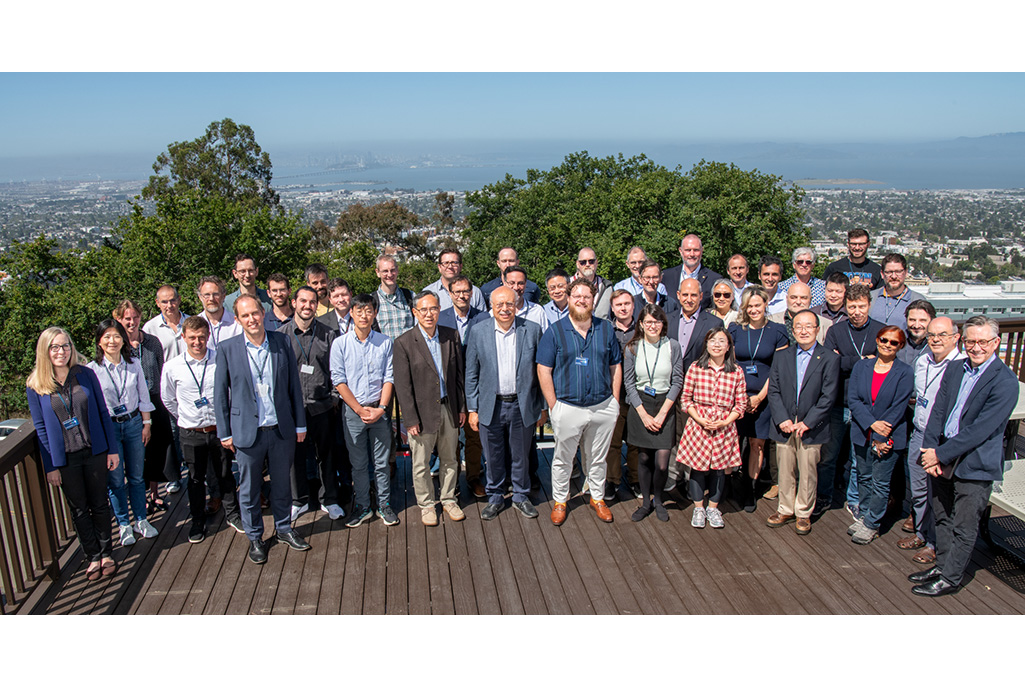
On June 4-5, 2026, the Accelerator Technology and Applied Physics (ATAP) Division at Lawrence Berkeley National Laboratory (Berkeley Lab) hosted a two-day workshop to outline a roadmap for developing LPAs and high-power laser technology to support the U.S. Department of Energy’s Office of Basic Energy Sciences (BES) facilities. The workshop, titled “Laser Plasma Accelerators & Advanced Laser Technology for BES,” was co-chaired by Alan Fry and Zhirong Huang from the SLAC National Accelerator Laboratory, and by Carl Schroeder, Jeroen van Tilborg, and Jens Osterhoff from ATAP. Sixty leading experts in accelerators, lasers, AI/ML, diagnostics, detectors, controls, and facility operations attended.

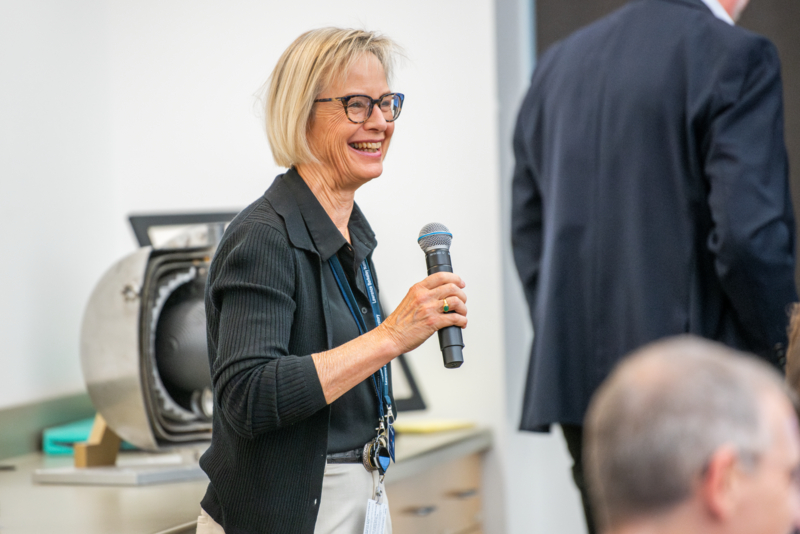
“We brought together the U.S. accelerator and laser research community to develop an R&D roadmap to realize the tremendous potential of LPAs and high-average-power lasers,” says Osterhoff, a senior scientist and director of Berkeley Lab’s BELLA Center. “These technologies will enhance capabilities at BES user facilities and support the BES mission.”
By harnessing the enormous electric fields that form when an intense laser pulse passes through an ionized gas, LPAs can accelerate electrons over distances thousands of times shorter than those of conventional accelerators. This accelerator technology requires high-power lasers capable of generating the ultrafast, high-intensity pulses that drive LPAs. Advances in these technologies could pave the way for tabletop X-ray sources, compact free-electron lasers (FELs), future particle colliders, ultrafast probes of chemical reactions, novel medical imaging and therapy tools, and new capabilities for industrial inspection and materials development.

High-power laser technology also enables new scientific possibilities at current frontier BES user facilities, such as Berkeley Lab’s Advanced Light Source and LCLS-II at SLAC, by providing high-energy pulses at MHz repetition rates, and at the Spallation Neutron Source at ORNL, by overcoming current beam-intensity limits through laser-based beam stripping.
The workshop’s timing was particularly significant. Advanced acceleration methods could have a dramatic impact on BES facilities over the next decade. The workshop offered the community an opportunity to identify technology gaps, align on promising research directions, and help shape a coordinated national effort to bring the next generation of accelerator and laser technology to BES facilities—and to the broad scientific community they serve. The roadmap will chart a path for developing these technologies to enhance current and future BES facilities.
Participants also explored near- and long-term opportunities. In the near term, for example, LPA injectors for extreme ultraviolet free-electron lasers and synchrotron light sources, compact LPA systems, and advanced lasers can enhance the capabilities of existing facilities. Looking further ahead, the same technology path points toward compact, high-repetition-rate LPA-driven XFELs and other frontier BES applications operating at kilohertz to megahertz rates—capabilities that could ultimately push the photon-energy frontier of FEL facilities.
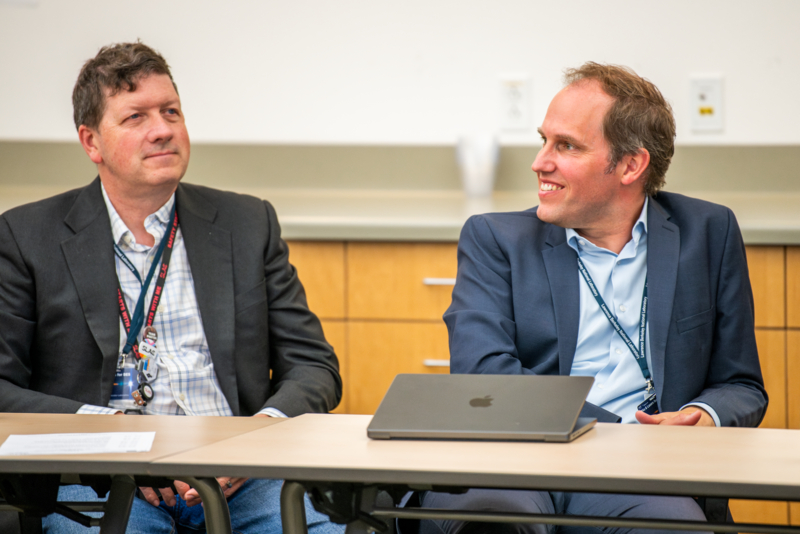

“A particularly exciting and motivating phase of the workshop followed as several AI/ML experts showcased impressive results from their accelerator user facilities,” notes van Tilborg, a senior scientist and deputy director at BELLA.
These experts, adds van Tilborg, also requested access to accelerator AI/ML testbeds beyond the short midnight time slots currently available to them. “Access to agile and user-configurable LPAs would undoubtedly provide an invaluable platform for rapid AI/ML development critical to DOE accelerator and light-source applications.”
Participants worked to identify scientific opportunities, key technological challenges, and collaborative structures to address them.
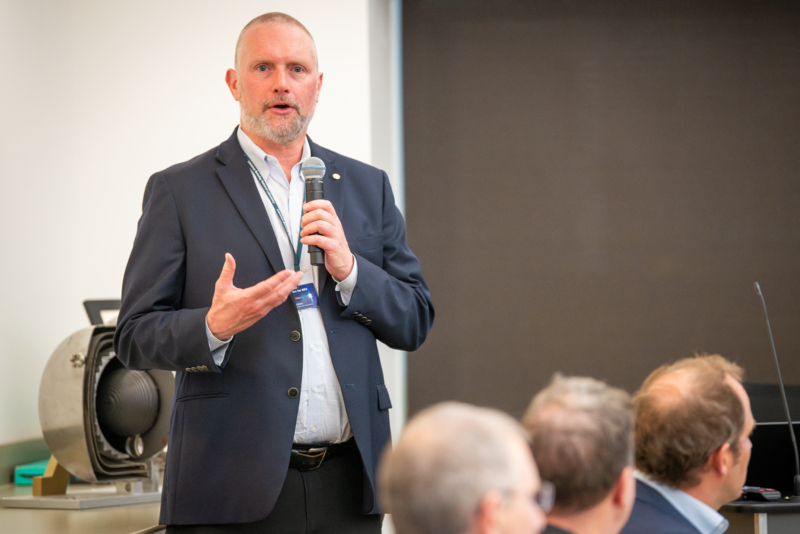
“The next steps will be to publish our findings in a community report for BES outlining the R&D roadmap for applying this technology over the next decade,” says Schroeder, a senior scientist and deputy director at BELLA.
According to the organizers, the workshop report is expected by the end of the summer.
For more information on ATAP News articles, contact caw@lbl.gov.