Employee Spotlight
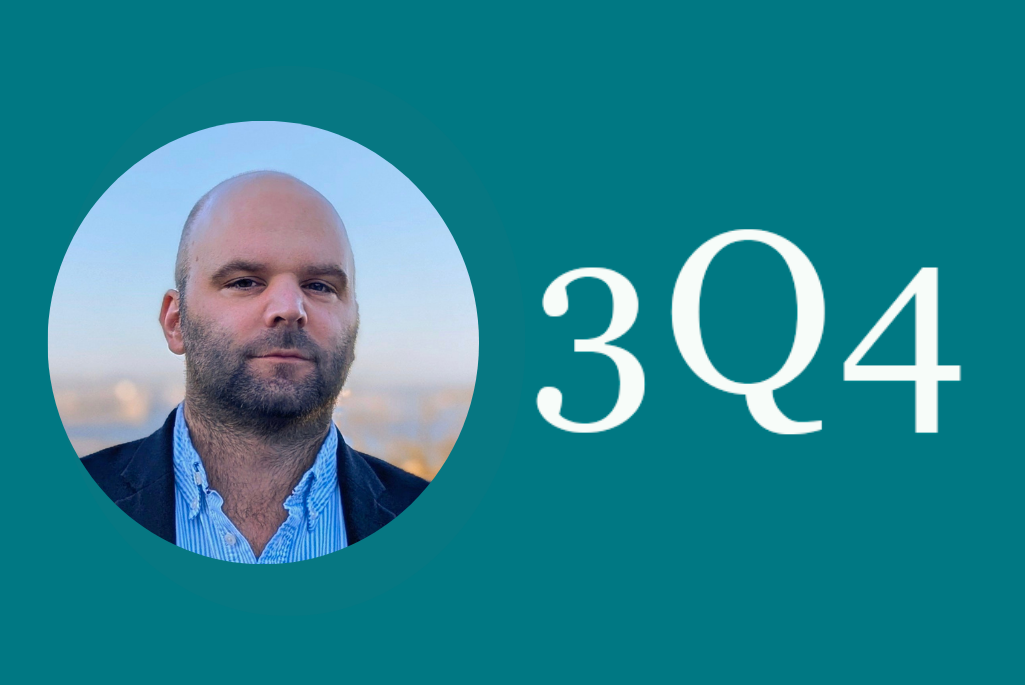
Antonin Sulc is a postdoctoral researcher in the Advanced Light Source Accelerator Physics Program within the Accelerator Technology & Applied Physics (ATAP) Division. He holds a Ph.D. in computer vision from the University of Konstanz in Germany and bachelor’s and master’s degrees in artificial intelligence (AI) from the Czech Technical University in Prague, Czech Republic. Before joining the Lab in 2025, he served as a senior scientist at the Deutsches Elektronen-Synchrotron in Hamburg, Germany.
What fueled your interest in particle accelerators and their applications?
I wanted to study mathematical physics. I like that in physics, things are usually well described in formal terms and have a nice overlap with the real world, applications, and reality.
Some may disagree; for instance, high-energy physics is very abstract, and people might have trouble grasping the intuition behind things we cannot see, such as quantum mechanics, when gravity is so practical and overwhelmingly easy to try. However, based on these very abstract ideas, a former Lab member recently won a Nobel prize for quantum computing, which is very real and almost as practical!
So it is fascinating that two of my passions, physics and computer science, came together.
What attracted you to join the Advanced Light Source Accelerator Physics Program?
It is appropriate to say, “Make my parents proud,” but there is also an intrinsic motivation to explore not only science but also the overall experience across different labs.
 The Lab has a history dating back almost a century, which is quite impressive. I still cannot believe the Lab’s Advanced Light Source (ALS), such a complex machine, has been running continuously for that long (excluding shutdowns and maintenance). The Lab is particularly interesting and has a compelling story involving many excellent people. Without resorting to cheap clichés, one of the most interesting aspects of the Lab is its open-mindedness: I still don’t know how it’s achieved, but I greatly enjoy the Lab’s overall attitude toward novel ideas.
How have you found working at the Lab, and what research are you working on?
A good combination of everything. Being surrounded by exceptional minds and having the Lab’s support for new ideas definitely pushed me to my limits, teaching me something new about myself that will likely shape my future career path. I really enjoy working with people. We have some really nice students at the Lab, and we can mutually benefit each other: they help me learn about leadership, and I help them when they need it.
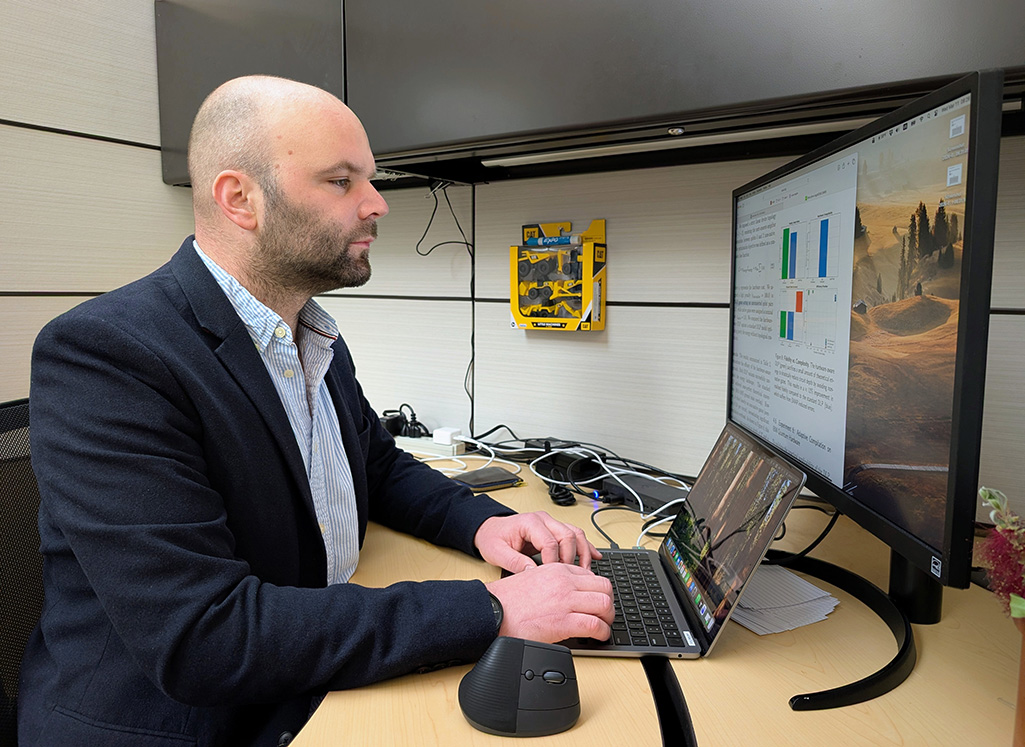
Currently, along with a few students, I am benchmarking language models for the ALS to determine which model best serves our operators. We are also working on several anomaly detection projects. One system, recently implemented by a student, is already running in our control system. Another detects failures minutes before they happen and, importantly, identifies the root cause. That might be a game-changer, because, to my understanding, identifying which variable in the control system caused the problem would be a great help. So far, it works well on paper, but now the hardest part comes: demonstrating its utility.
I also spend considerable time learning about new AI trends. Here, I must particularly stress the importance of access to the lab’s learning tools and resources (CBORG, Gemini Pro, Perplexity Pro), which significantly shorten the learning curve.
For more information on ATAP News articles, contact caw@lbl.gov.