(Republished with the kind permission of the University of Michigan)
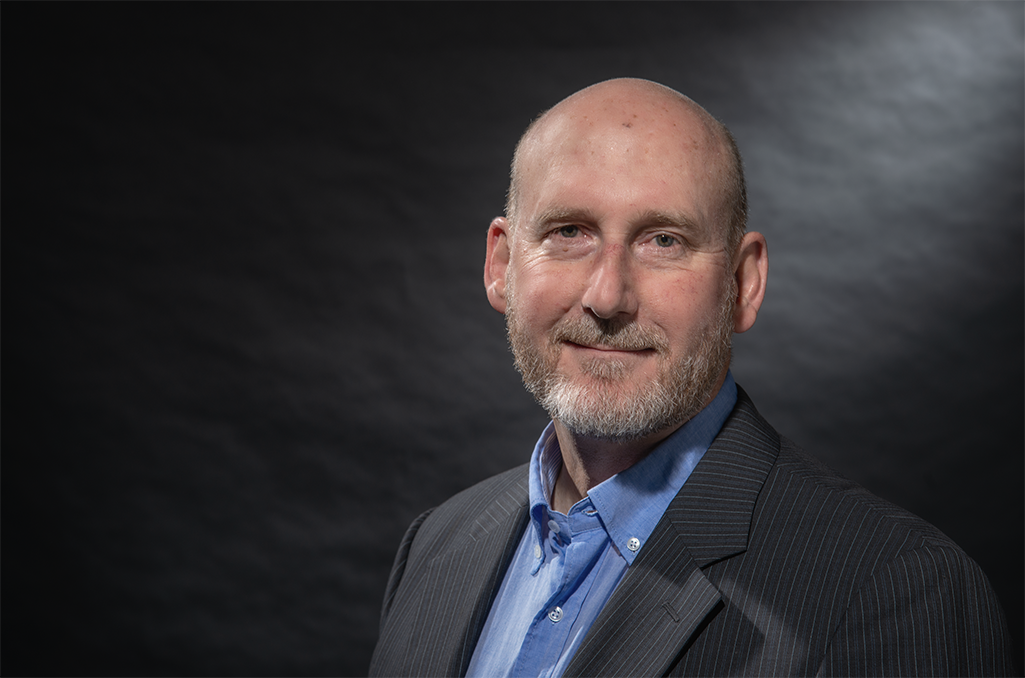
He laid the theoretical foundation for a new class of particle accelerators that fit on a table instead of a football field—and then helped bring them to life. For these and other accomplishments, Eric Esarey, former director of the Berkeley Lab Laser Accelerator (BELLA) Center in the Accelerator Technology & Applied Physics Division at the Lawrence Berkeley National Laboratory, has been chosen to receive the 2025 University of Michigan Prize for Excellence in Plasma Science and Engineering.
Over the past three decades, Esarey has played a central role in advancing laser-plasma accelerators (LPAs) from theory to the global research enterprise they are today, with broad applications in medicine, energy, materials science, and national security. He is currently the senior scientific advisor at the BELLA Center. He’s also an alumnus of the U-M Department of Nuclear Engineering and Radiological Sciences.
The annual international prize, established by the Michigan Institute for Plasma Science and Engineering (MIPSE) and Michigan Engineering in 2023, honors a researcher, educator or manager for advances in plasma science and engineering that have or will significantly benefit society.
“Eric’s foundational work makes it possible to build compact, powerful particle sources that can fit in a university lab or, one day, a hospital,” said selection committee chair Peng Zhang, associate professor of Nuclear Engineering and Radiological Sciences at the University of Michigan and MIPSE member.
“What began in the 1980s with a few researchers is now a thriving, international field with hundreds of researchers, over $1 billion in investments, and major programs and facilities on three continents.”
Esarey is honored “for fundamental research on intense laser-plasma interactions, advanced accelerators, and novel radiation sources,” according to the award citation.
Recent findings demonstrate the potential of applications such as treatment of nuclear waste and targeted radiation cancer treatments that could spare healthy cells.
Plasmas—ionized gasses that make up most of the ordinary matter in the universe—have long been of interest to scientists and engineers due to their unique properties. They can conduct electricity, respond to magnetic fields, and produce chemically reactive environments at low temperatures. Today they’re used in medicine, manufacturing, microelectronics, sustainable technologies and space exploration, for example. Plasmas are the basis of fusion based power generation.
Laser-plasma accelerators use ultra-intense laser pulses to generate plasma waves that can accelerate particles to near-light speeds over distances of only centimeters (a few inches)—orders of magnitude shorter than conventional particle accelerators. They make it possible to generate high-quality electron beams for applications in medicine, materials science, and high-energy physics. Esarey was among the first to see the potential of chirped-pulse amplification lasers—which later earned their inventors a Nobel Prize—to drive such waves.
He also co-developed techniques for guiding lasers through plasma channels, enabling scientists to extend acceleration distances and produce electron beams with unprecedented quality. These insights have underpinned many of the BELLA Center’s record-setting experimental achievements, including multi-GeV electron beams produced with lasers propagating through only centimeters of plasma.
“Being recognized by the University of Michigan, where I began my academic journey, is deeply meaningful,” Esarey said. “The field of laser-plasma acceleration has grown tremendously over the past few decades, and I’m honored to have been part of that evolution—from the early theoretical questions to today’s experimental frontiers.”
Esarey has been at Lawrence Berkeley National Laboratory since 1998. During his tenure as director of the BELLA Center, he led one of the world’s foremost programs in laser-plasma accelerator science. He is currently the senior scientific advisor at the BELLA Center. He was previously with the U.S. Naval Research Laboratory, where he helped introduce chirped-pulse amplification laser systems for accelerator research.
He received his bachelor’s in nuclear engineering from the University of Michigan in 1981 and his PhD in plasma physics from Massachusetts Institute of Technology in 1986. He has authored more than 270 peer-reviewed publications, including a widely cited Reviews of Modern Physics article that remains a cornerstone of the field. His work has been cited more than 25,000 times.
The Michigan Institute for Plasma Science and Engineering (MIPSE), sponsored by the University of Michigan, brings together plasma researchers from Michigan universities and the international community to investigate fundamental plasma phenomena and translate advances in plasma science into technologies that benefit society.
Click here to read the original article.
For more information on ATAP News articles, contact caw@lbl.gov.