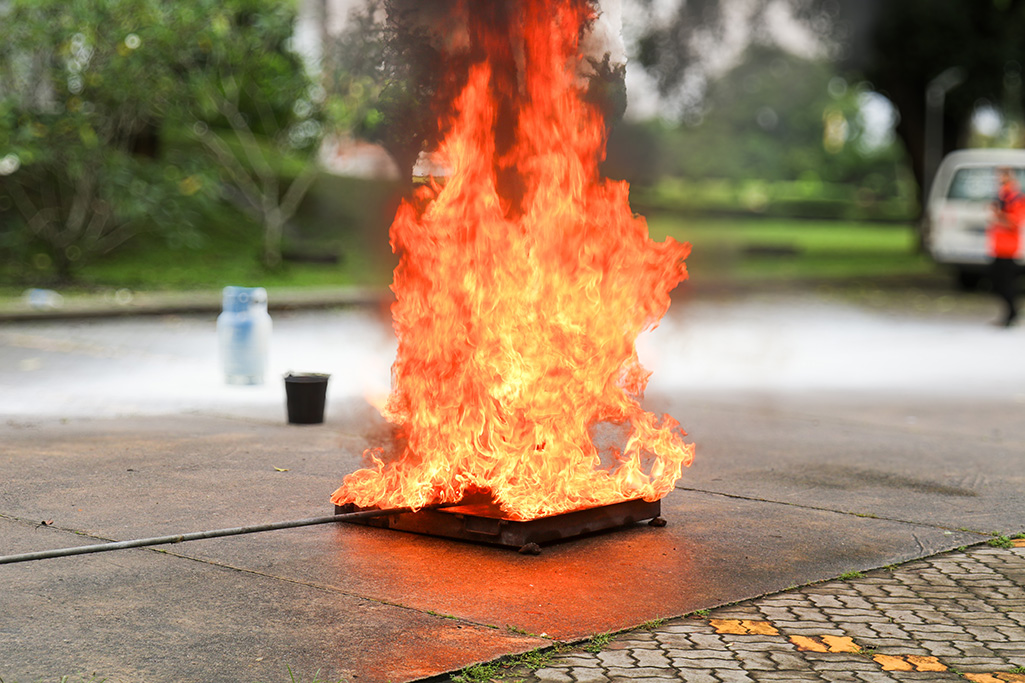
During a safety talk at our All-to-All meeting on April 27, 2026, Ian De Vries, a fire protection engineer with the Berkeley Lab’s Security & Emergency Services (SES) Division, outlined common yet often overlooked summer fire risks and how to address them. In line with the U.S. Department of Energy’s Office of Science safety mission, De Vries said SES prioritizes identifying unconventional ignition vectors during peak summer months. While high-profile wildland-urban interface fires dominate the strategic landscape, a parallel set of “sneaky” residential and industrial hazards contributes to significant annual property loss and injury.
Sneaky Fire #1: Overworked Air Conditioning Units
Sustained heat waves create a “perfect storm” for mechanical failure, turning environmental stressors into critical safety risks for HVAC systems. When ambient temperatures remain elevated, air conditioning units often run continuously, leaving no margin for thermal recovery.
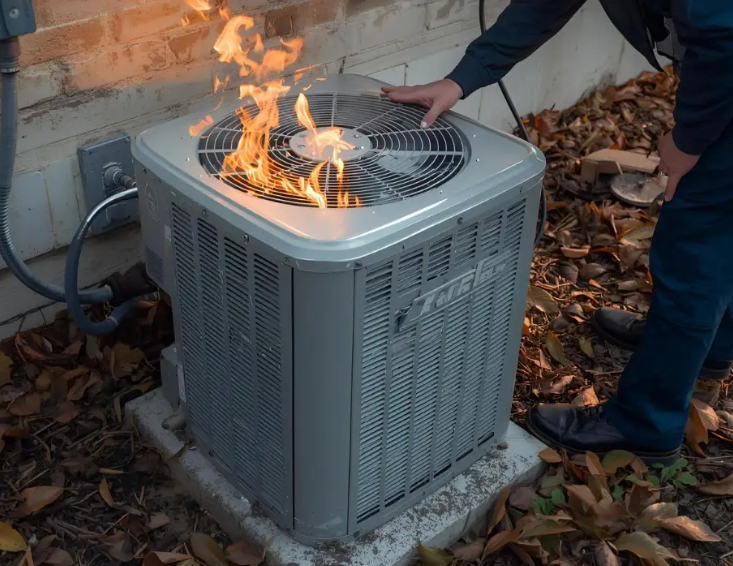 The National Fire Protection Association (NFPA) indicates that air conditioning units are involved in 2,300 to 2,800 fires annually. The mechanical failure chain begins when a system runs “non-stop” while battling restricted airflow—typically caused by saturated internal filters or external obstructions such as yard debris and leaves, forcing the motor into a perpetual “overtime” state, leading to internal overheating, thermal degradation of wire insulation, and subsequent electrical ignition.
Mitigation strategies include:
- Clear External Obstructions: Maintain a defensible perimeter around outdoor AC condenser units by removing all leaves and organic debris to ensure optimal airflow.
- Filter Rotation Schedule: Implement a rigorous maintenance cycle to replace indoor air filters, preventing the motor from straining due to particulate buildup.
Sneaky Fire #2: Pool Chemicals
The strong oxidizers commonly known as pool chemicals are a shared hazard, found both in residential backyards and in specialized water treatment applications here at Berkeley Lab. The 4,500+ emergency room visits each year resulting from pool-chemical-related incidents underscore the severity of this hazard.
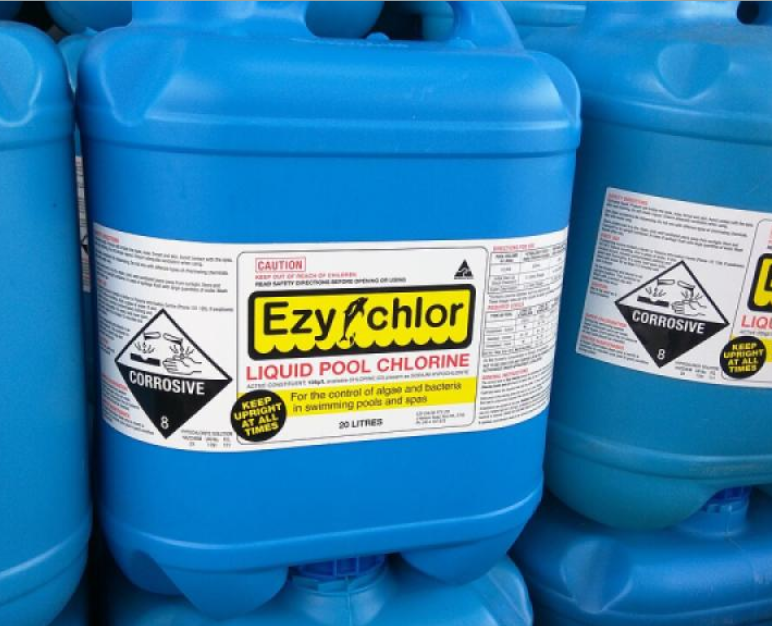 The primary risk factor is chlorine’s high reactivity when used as an oxidizer. A small amount of water entering a storage container, or a chemical coming into contact with organic materials—such as a spilled drink—can cause a violent, heat-producing reaction. In addition to the fire risk, this reaction creates an immediate atmospheric hazard by rapidly releasing toxic chlorine gas and vapors, which accounts for the high volume of respiratory-related ER visits.
Mitigation strategies include:
- Securely store all pool chemicals in a cool, dry, and well-ventilated space, isolated from other liquids and protected from direct sunlight, to prevent thermal destabilization.
Sneaky Fire #3: Oily Rags
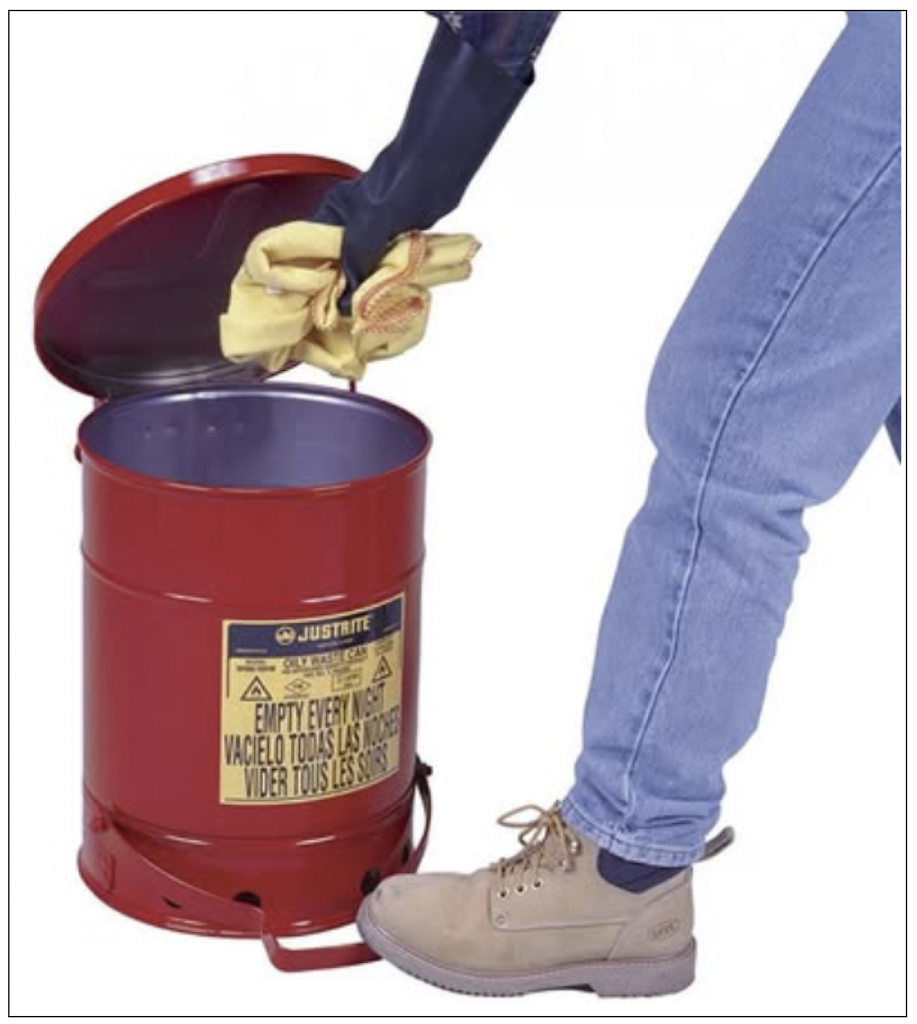 One of the most counterintuitive fire protection phenomena is spontaneous combustion, particularly during DIY projects involving wood stains, oil-based paints, and polyurethanes. NFPA data confirms that this oversight causes 900+ fires annually.
The danger stems from an exothermic oxidation that can occur as the oils dry, releasing heat. When the rags are “crumpled up,” they can act as insulators, trapping heat within the fabric layers. Without sufficient surface area to dissipate this heat, the internal temperature climbs until it reaches the autoignition point.
Mitigation strategies include:
- Spread rags completely flat on an outdoor concrete surface, which maximizes surface area for heat dissipation and allows the exothermic process to complete safely until the rags are stiff and dry.
- Immediately seal the rags in a dedicated metal container filled with water. This submergence deprives the reaction of oxygen and provides a heat sink to manage thermal output.
For more information on preventing and responding to fire hazards, visit Fire Protection & Engineering Services.
For more information on ATAP News articles, contact caw@lbl.gov.