Service, as a core value of the Accelerator Technology & Applied Physics (ATAP) Division at the Department of Energy (DOE)’s Lawrence Berkeley National Laboratory (Berkeley Lab), reflects a strong commitment to community and organizational growth.
To highlight the importance of service at the Lab, Arun Persaud, head of ATAP’s Fusion Science & Ion Beam Technology Program, delivered a thought-provoking talk at our All-to-All meeting on August 25, 2025, about how it embodies “the spirit in which we discover and innovate to further the Berkeley Lab and DOE missions and perform outreach efforts to prepare the next generation.”
At the center of service, says Persaud, is the “promotion of outreach and education, which prepares the next generation of particle scientists and engineers, while aligning with the broader goals of the DOE and Berkeley Lab. Workforce development, mentoring, and enriching future researchers are key parts of the Lab’s approach to service.
To achieve this, the Lab offers various opportunities for undergraduate, postbaccalaureate, and graduate students. Programs including the Science Undergraduate Laboratory Internship (SULI), the Community College Internship (CCI), and the Science Graduate Student Research (SCGSR) scholarship provide structured, hands-on research experiences.
Supported by the DOE Office of Science’s Office of Workforce Development for Teachers and Scientists, in collaboration with National Laboratories, these internships range from 10-week summer programs to year-long appointments, providing students with immersive experiences in the Lab’s research environment. These initiatives are essential for building a pipeline of future particle researchers, directly supporting the long-term health of the nation’s scientific community.
Mentorship
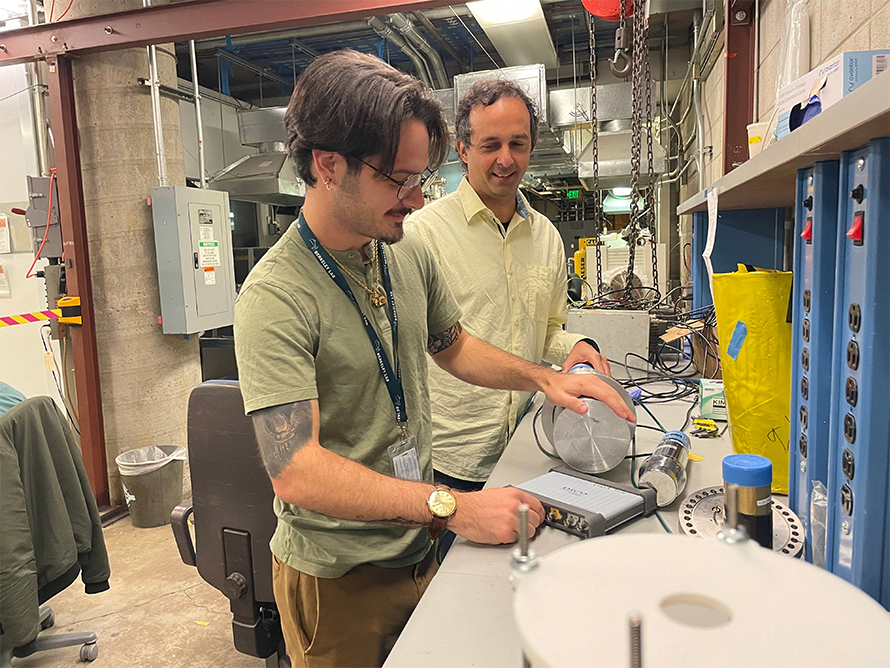
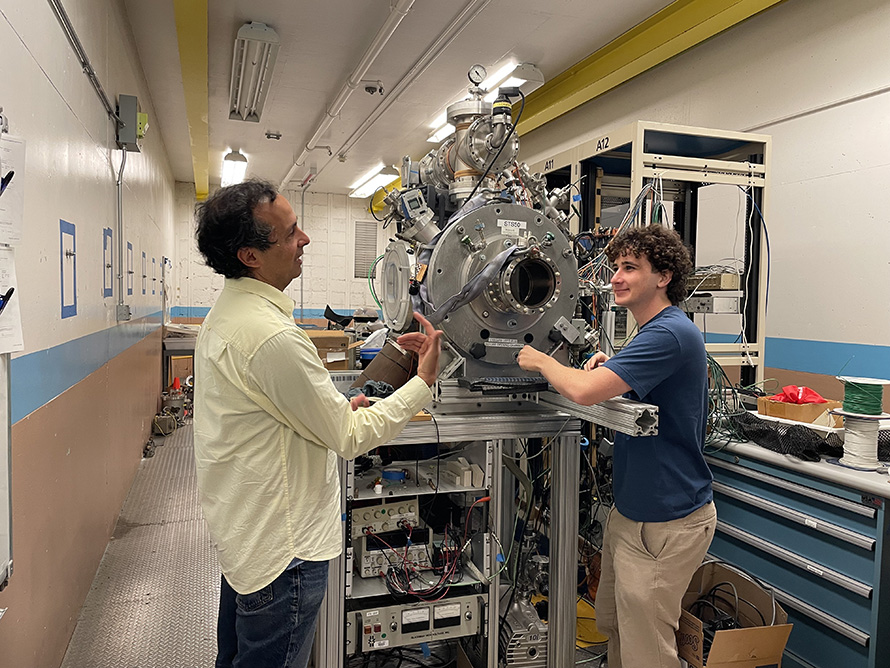
Mentorship plays a crucial role in service. Experienced Lab researchers guide students, sharing knowledge and fostering professional growth. The relationship between mentors and interns creates a mutually beneficial environment where knowledge transfer and skill development occur naturally.
For prospective mentors, Persaud provides the following advice:
- Check deadlines at: https://education.lbl.gov/internships (probably about six months earlier)
- Sign up for online portals to review candidates
- Interview potential candidates
- Select/rank candidates
When interns are here:
- Provide a desk and a computer
- Include in WPC
What the Lab organizes:
- Badges, orientation classes, and payment
- Organize tours (NERSC, ALS, BELLA Center…) and talks
- A poster session where the interns need to present
According to Persaud, this structured approach “enhances the quality of candidates and positions them to contribute meaningfully during their internship.” The collaborative aspect of service promotes creativity and innovation, as our experienced and world-renowned scientists and engineers work with students, enabling new perspectives to develop. Such interactions often lead to original research ideas, emphasizing the importance of community in the scientific inquiry process.
ATAP’s dedication to service as a core value underscores the scientific community’s responsibility to conduct research and foster workforce development. It also promotes a spirit of service, strengthening the Lab’s contributions to science while fostering the next generation of researchers.
For more information on ATAP News articles, contact caw@lbl.gov.