Service is more than a motto; it is a core principle guiding how the lab uses public funds to serve society, according to Paolo Ferracin, a senior scientist and deputy of the Superconducting Magnet Program (SMP) in the Accelerator Technology & Applied Physics (ATAP) Division, and Ye Yanbg, an SMP research scientist, who delivered a thought-provoking talk at the division’s All-to-All meeting on March 24, 2026.
Ferracin says, “Service as a core value begins with the recognition that ATAP’s work is publicly funded. This funding comes from taxes, and the lab’s mandate is to give back value to the public through knowledge, technology, and by training future generations of scientists and engineers.”
At ATAP, service is a core value that influences every decision, project, and partnership in advancing science for the public good. It is a disciplined, transparent dedication to delivering what the public expects, when they expect it, with the highest standards of integrity, safety, and innovation. This approach supports the missions of Berkeley Lab and the Department of Energy, grounding each project—ranging from basic research to large-scale applications—in a shared responsibility to people, the planet, and the nation.
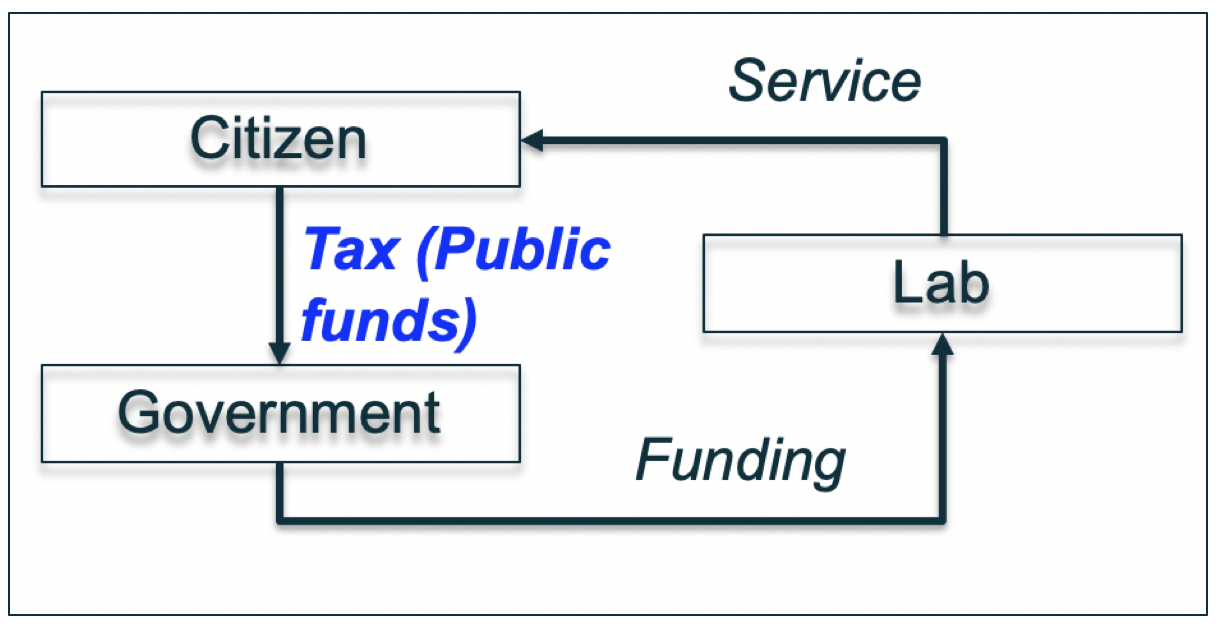 This circular approach—funding, service, outcomes, renewed support—shapes a culture of frugality and efficiency, says Ferracin. “The public’s trust depends on clear commitments: delivering the right results on time, communicating progress openly, and demonstrating that every dollar is spent wisely, effectively, and with accountability.”
Within this stewardship framework, service is the driving spirit behind discovery and innovation, extending to outreach and educational activities that prepare the next generation of scientists, engineers, and informed citizens. ATAP’s work is not confined to a lab; it influences the broader community and strengthens the nation’s scientific infrastructure.
Practically, ATAP’s Service philosophy translates into practices that reduce risk and enhance efficiency. For complex projects—such as large superconducting magnet systems—design work is documented and standardized. This includes following industry standards such as ISO, IEC, JIS, and ASME Code III, and integrating FMEA (Failure Mode and Effects Analysis) into assembly procedures. ATAP aims to deliver products and technologies that are reliable, measurable, and beneficial to the public, minimizing risk and preventing costly setbacks.
Ferracin says, “This disciplined approach is strengthened by ATAP’s design-to-delivery mindset, which guides its projects.” For example, when developing critical magnet systems, the emphasis is not only on performance but also on schedule, documentation, and traceability. The service value thus becomes a multi-dimensional capability: thorough engineering, transparent governance, responsible budgeting, and reliable project management. The result, he adds, is a portfolio of technologies and processes that can be scaled, replicated, and shared with partner labs, industry, and government programs—each step guided by the principle of serving humankind.
Click here to learn how ATAP’s Stewardship, Outreach & Culture Committee integrates core values and stewardship principles into the division’s daily operations and empowers its researchers, technicians, operations staff, affiliates, and collaborators to support the Lab’s and DOE’s vision and mission.
For more information on ATAP News articles, contact caw@lbl.gov.