
ATAP researchers, in collaboration with colleagues from across Berkeley Lab, the Department of Energy National Labs, academia, and industry, will harness Super Intelligence (SI) to accelerate progress toward fusion, which promises unlimited, clean energy; enhance the performance of particle accelerators and advance next-generation accelerators; and create powerful new light sources for scientific research, medicine, and industrial manufacturing.
Building on decades of research in particle accelerator science and modeling, superconducting magnet technologies, high-power lasers, quantum systems, and advanced light sources, ATAP is uniquely positioned to harness SI and machine learning (ML) to drive innovation and accelerate discovery science breakthroughs that will benefit society and secure America’s global technological leadership.
“The Genesis Mission offers an opportunity to harness SI to rapidly advance the design, technology, and operation of current and future particle accelerators and fusion systems,” says ATAP Division Director Cameron Geddes. “SI-driven improvements promise to transform a broad range of science.”
The projects ATAP is leading and collaborating on are:
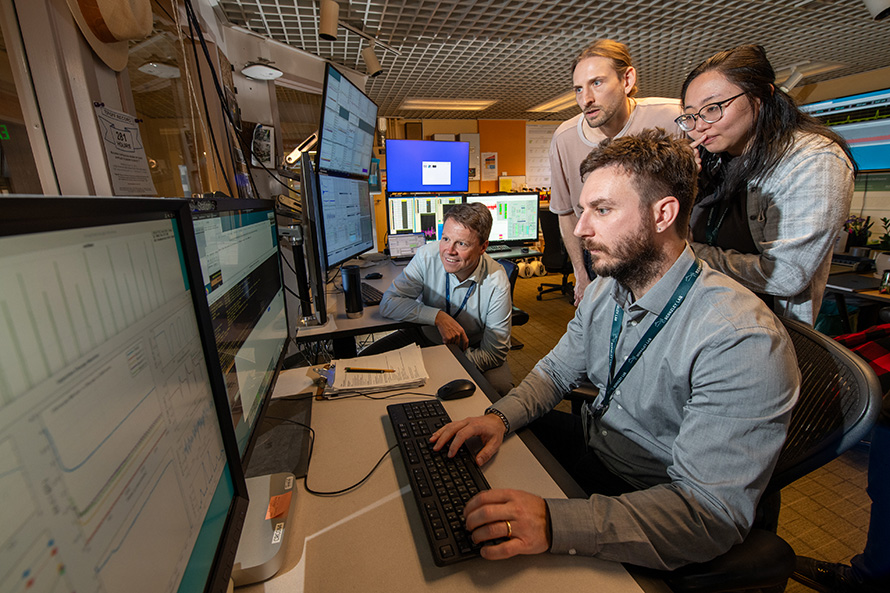
The Multi-Office Accelerator Team Core (MOAT-Core) Project
The MOAT-Core project unites several national labs, universities, and industrial partners to build shared Super Intelligence (SI) infrastructure to improve the design, operation, and modeling of particle accelerators across the DOE complex.
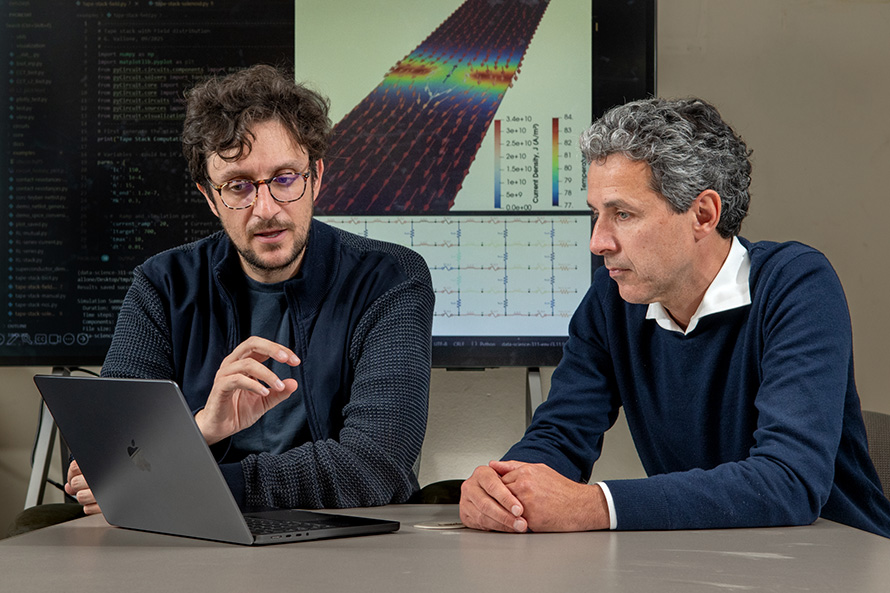
Physics-informed Digital Twins for Fusion Magnet Systems
AI-driven digital twins will enable diagnostics, protection, and control of High-Temperature Superconducting fusion magnets, supporting safe and economically viable compact fusion power plants. The ATAP Division and the Engineering Division at Berkeley Lab co-lead the project.
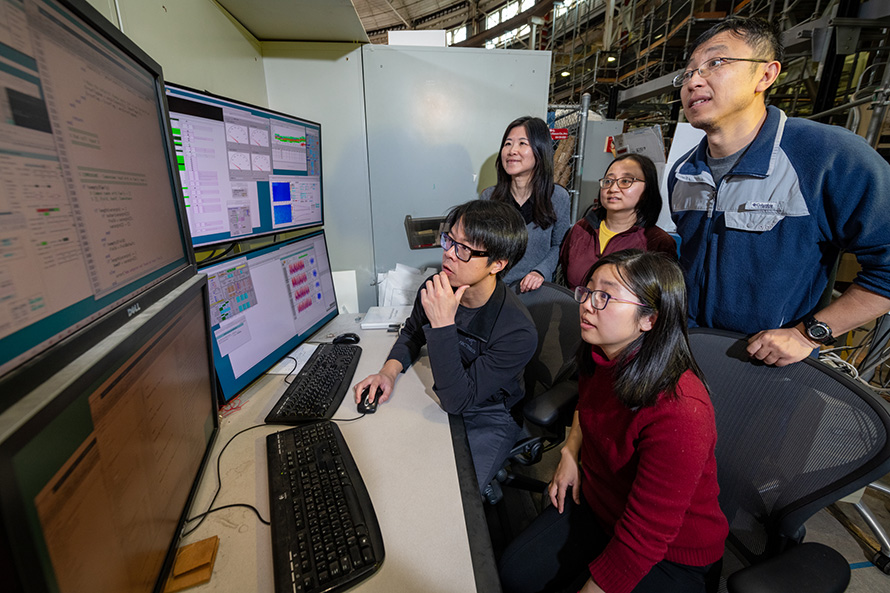
AI/ML Resonance Control for High-Reliability, Low-Cost Accelerator Operations
Using AI to keep particle accelerators finely tuned will save millions of dollars in operating costs each year and make them more reliable and affordable.
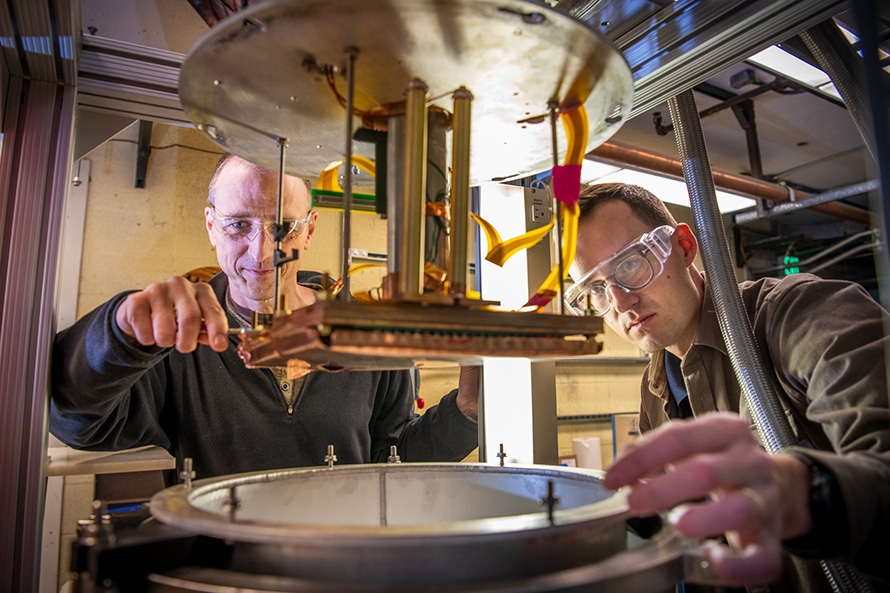
AI-Accelerated Digital Twin for REBCO-Coated Conductor Manufacturing in Superconducting Fusion Magnet Systems
Using AI to make the superconducting wires inside fusion energy magnets more reliable, more affordable, and more efficiently manufactured here in the United States.
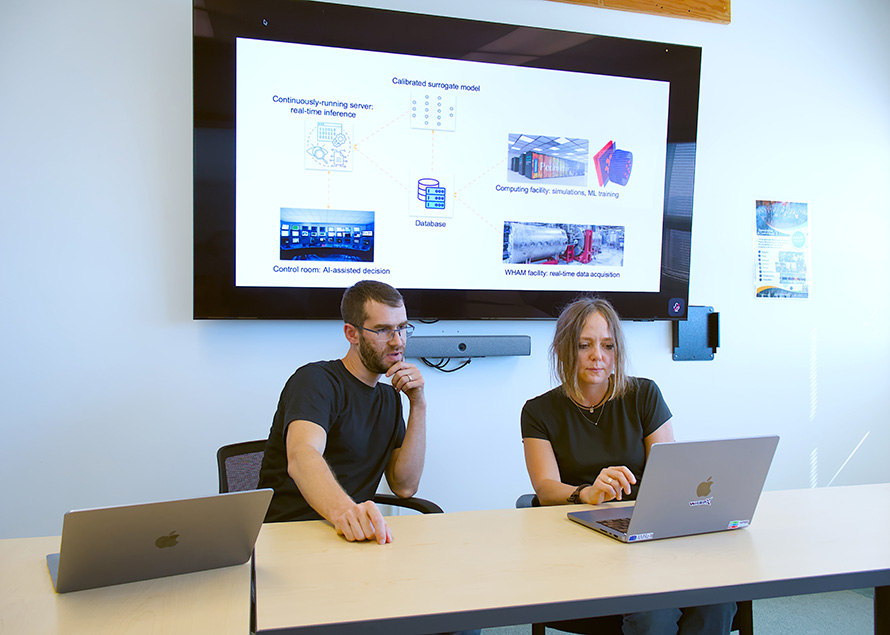
AI-Enabled Digital Twin for Near-Real-Time Optimization and Decision Support of Fusion NBI Systems
Scientists are developing AI software that mirrors a fusion machine’s heating system, enabling operators to tune it faster and more precisely to advance clean energy.
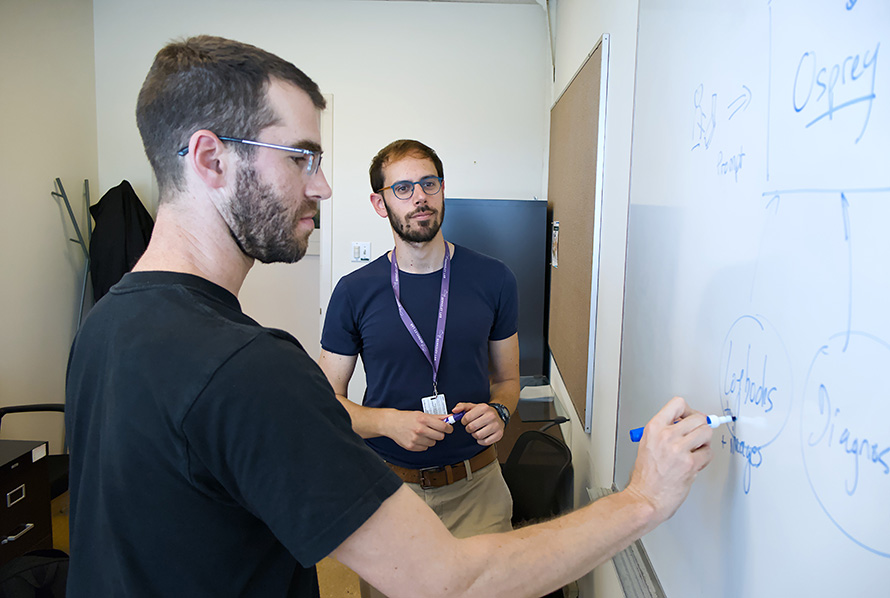
Autonomous Implosion Design and Experimental Co-Piloting via Physics-Grounded Agentic AI
Building an AI assistant that helps scientists run fusion energy experiments more effectively by guiding decisions between powerful laser pulses.
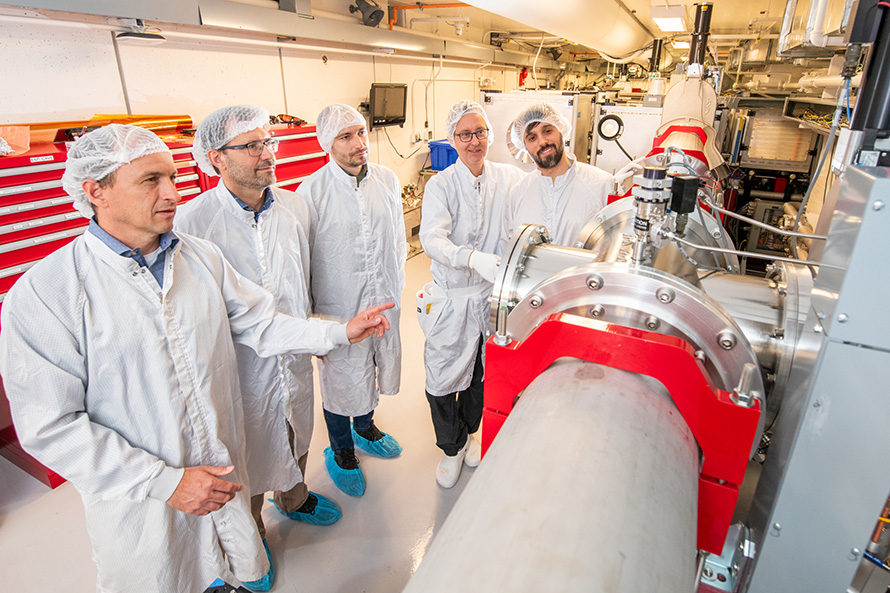
Digital Twins for Laser-Plasma Wakefield Acceleration: From Plasma Channel Formation to Beam Optimization
Scientists are using AI to create a digital twin of a laser-plasma wakefield particle accelerator, enabling rapid predictions of the accelerator’s beam properties to improve performance.
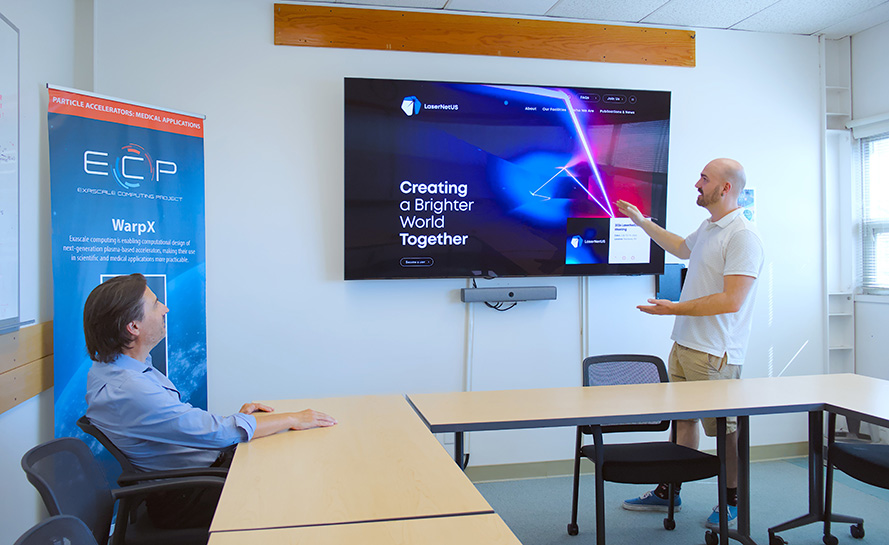
Facility-Level Agentic AI for Portable LaserNetUS Diagnostics and Interoperable Device Integration
AI assistants will analyze diagnostic data from powerful laser experiments and work across fusion laboratories as part of the Department of Energy’s AI Genesis Mission.
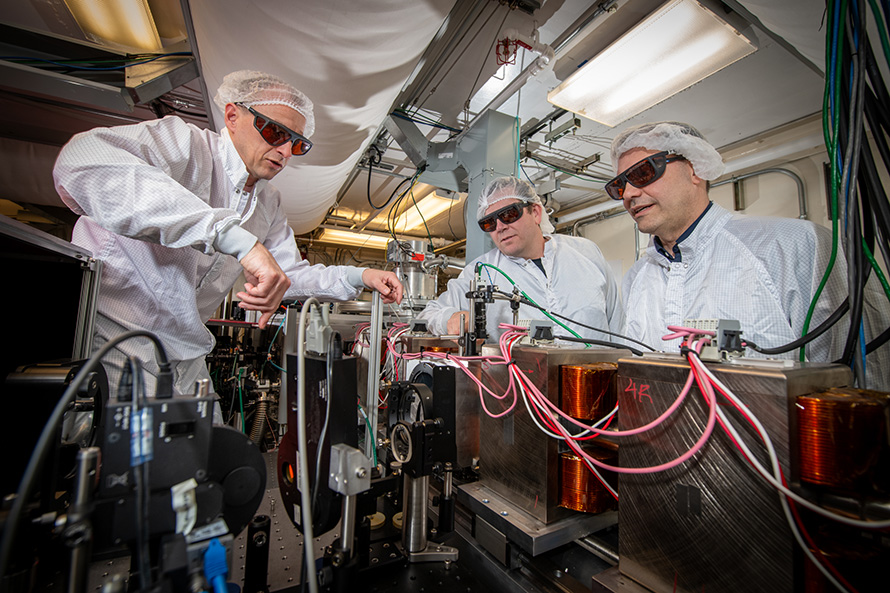
Self-Optimizing Digital Twin for Compact Laser Plasma Accelerator-Driven Light Sources
Scientists are teaching AI to stabilize a compact particle accelerator, shrinking the building-sized machines that produce powerful light for scientific research and computer chip manufacturing.
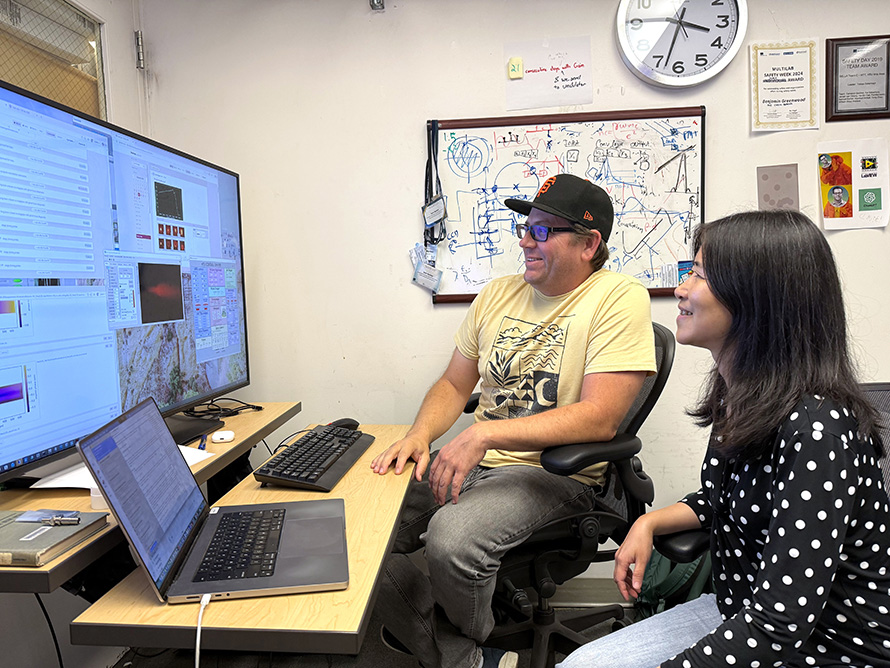
From Beam Loss to Beam Intelligence: Adaptive Generative AI for Autonomous Accelerator Facilities
Develop a unified Super Intelligence (SI) framework combining physics-informed generative SI and safety-constrained adaptive control to accelerate beam tuning, enable virtual diagnostics, and improve beam delivery across isotope production facilities.