
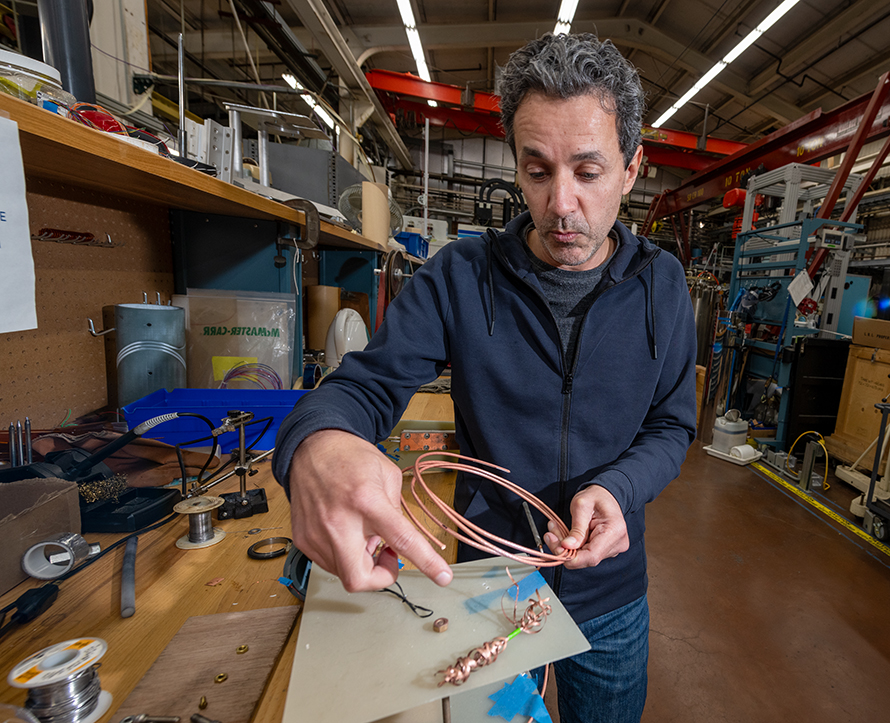
High-temperature superconductors such as REBCO tapes, sometimes used in the Cable On Round Core (CORC) geometry, offer attractive prospects for fusion-energy magnets.
Magnetic confinement fusion has the potential to transform the world’s energy supply, bringing the energy source of stars like our Sun under human control at power-plant scale to provide nearly unlimited energy. The volumetric power density that can be achieved—a leading metric for energy production—scales with the fourth power of the magnetic field, motivating the use of high field magnet technology. The emerging “compact fusion” industry focuses on using HTS materials–especially rare-earth barium copper oxide (REBCO).
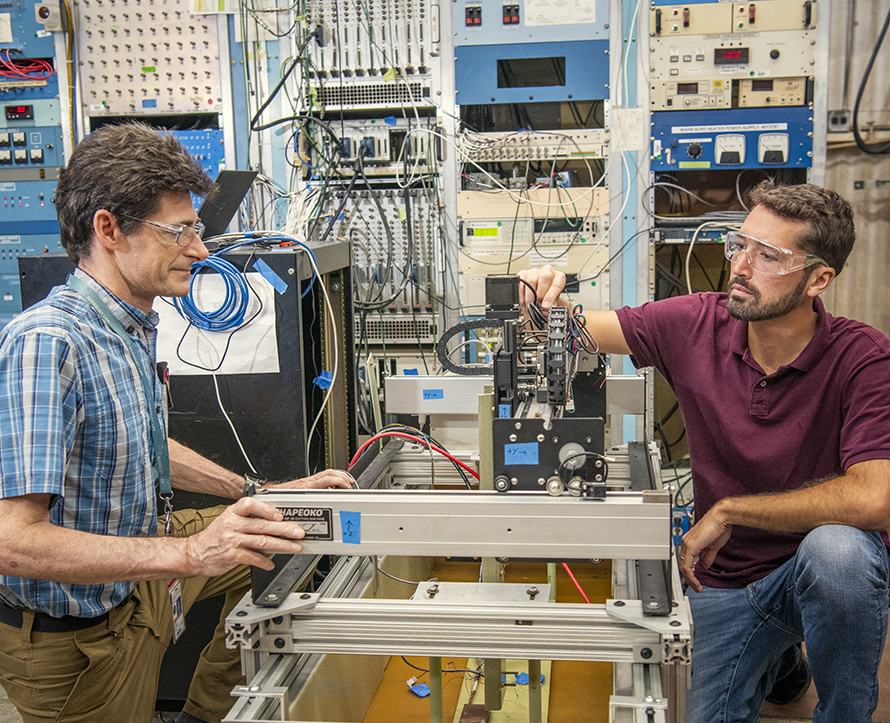
Chet Spencer (l.) and Reed Teyber investigate a high-temperature superconducting joint with a cryoscanner.
BCMT facilities and expertise are helping advance fusion technology by characterizing and understanding REBCO materials and magnet designs, developing new diagnostics and instrumentation, exploring innovative magnet protection methods, and creating magnet analysis tools tailored to the unique characteristics of REBCO-based magnets.
Fusion magnets are inherently large scale–even “compact fusion” systems are multi-story facilities–and safely storing and extracting the magnetic energy of the system remains a key challenge for the community. Our research complements the rapid developments driven by industry, offering a solid understanding of HTS magnet technology and helping to lower technical risks for the community.